
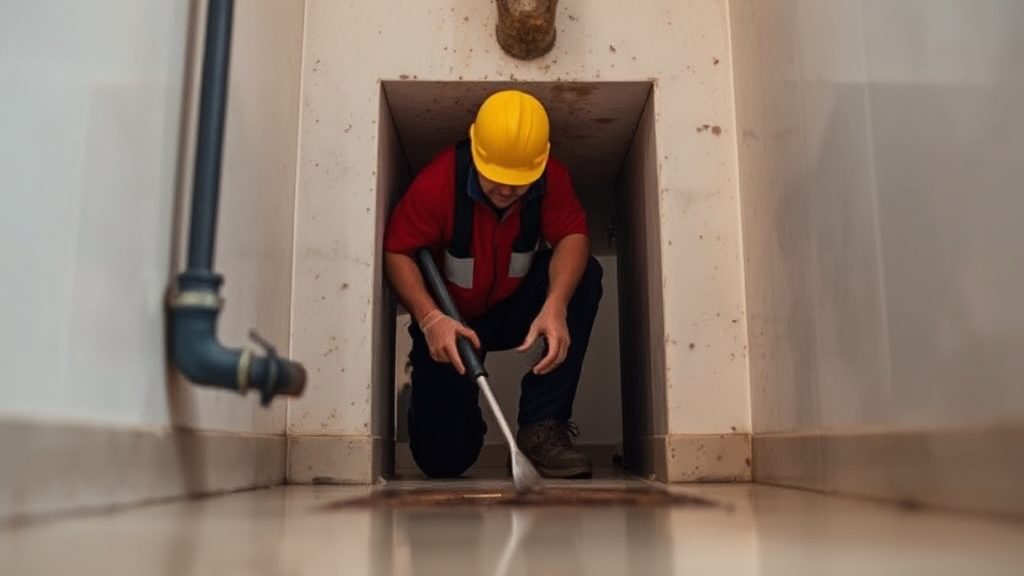
How to Get a Clogged Drain Fixed in Carrão, São Paulo Without Repeating the Same Mistake
By the end of this article, you will know exactly which mistakes turn a small clog into a flooded kitchen, how to correct each one, and when to call a professional desentupidora em Carrão São Paulo SP instead of reaching for another bottle of chemicals. I have handled these tickets for years, and most repeat callbacks come from the same handful of errors.
The search intent behind this topic is practical: you have a slow drain, a backed-up toilet, or a recurring smell, and you want it fixed today. The answer is not a single product. It is a sequence of decisions, and getting the first one wrong is what sends people to the emergency line at midnight.
Mistake 1: Treating Every Clog as a Chemistry Problem
The first correction is the simplest and the hardest to accept: most blockages in Carrão’s older residential buildings are physical, not chemical. Grease, soap scum, hair, food residue, and in older properties, root intrusion or collapsed clay pipe sections, do not dissolve because you poured something strong down the drain.
Chemical drain openers work on soft organic matter in the trap. They do nothing to a grease mat that has hardened ten meters down the line, and they do nothing to roots. Worse, they sit in standing water and can damage older PVC joints, rubber gaskets, and the finish on metal fixtures.
What to do instead
Start with mechanical removal. A plunger on a sink or toilet, a drain snake on a floor drain, or simply lifting the strainer and pulling out the hair and soap buildup solves a large share of slow drains before any product is opened. If the water drains slowly but never fully stops, the blockage is usually close to the fixture. If it backs up in multiple fixtures at once, the problem is in the branch line or the main, and no bottle will reach it.
Multiple fixtures backing up at the same time is the signal to stop pouring and start diagnosing. That pattern points to a shared line, and shared lines need a camera or a jetting hose, not a retail chemical.
When a professional call is the correction
If you have plunged, snaked the accessible trap, and the water still rises, the next step is a technician with a drain machine or a hydrojetting unit. A desentupidora Carrão team arrives with the equipment to clear the line and, just as important, to tell you what caused it so the same blockage does not return in three weeks.
One warning from the ticket log: never mix two different chemical drain cleaners. The reaction can generate heat and fumes in a confined space, and it makes the line unsafe for the technician who arrives later.
Mistake 2: Calling an Emergency Line for a Problem That Was Predictable
The second mistake is treating every blockage as a surprise. In practice, most emergency calls in Carrão follow a pattern that was visible for weeks: slow drainage in the kitchen sink, a gurgling sound when the washing machine empties, a drain that smells worse after rain, or water pooling at a floor drain.
Those are early warnings. Correcting them means scheduling a preventive visit during business hours instead of paying emergency rates on a Sunday. A planned inspection and cleaning costs less than an emergency callout, and it avoids the water damage that comes with a full backup.
The warning signs worth acting on
- Water draining slowly from more than one fixture in the same bathroom or kitchen.
- Gurgling or bubbling sounds from drains when another fixture is used.
- A persistent sewer smell in the bathroom, laundry area, or near the building’s inspection box.
- Recurring backups in the same spot every few months.
- Water rising in the floor drain when the shower runs.
Any one of these justifies a call. Two or more together justify a same-week visit. A recurring backup in the same location is the strongest signal that the line has a structural problem, such as a bellied pipe, root intrusion, or a buildup that a simple snake never fully removed.
What preventive service actually includes
A proper preventive visit is not just a rodding. It typically includes inspecting the accessible cleanouts, running a camera on lines with a history of problems, and hydrojetting the line to remove grease and scale from the pipe walls rather than just punching a hole through the middle of the blockage. That distinction matters: a snake opens a channel, while jetting cleans the inner surface, which is what delays the next clog.
Preventive hydrojetting is the difference between clearing a clog and removing the condition that caused it. For restaurants, condominiums, and older homes in Carrão, this is the service that reduces repeat emergency calls the most.
Mistake 3: Assuming the Cheapest Quote Is the Same Service
The third mistake is comparing quotes by price alone. Two companies can quote the same number and deliver very different work: one clears the visible blockage and leaves; the other clears the line, checks the cause, and confirms the flow with a camera or a test flush.
In Carrão, where many buildings date from the 1970s through the 1990s, pipe condition varies block by block. A quote that does not include an inspection on a recurring problem is not a cheaper service; it is a partial service that will generate a second invoice.
What a fair quote should specify
- The exact service: drain clearing, hydrojetting, camera inspection, or septic tank pumping.
- Whether the price includes access to cleanouts and any necessary opening of inspection boxes.
- Whether the technician will identify and report the cause of the blockage.
- Whether there is a written guarantee period and what it covers.
- Whether emergency or after-hours rates apply at the time you call.
A quote that omits the cause and the guarantee is incomplete. Ask directly what happens if the same line backs up within the guarantee window, and get the answer before the technician starts.
Emergency versus scheduled: a simple comparison
| Factor | Emergency call | Scheduled preventive visit |
|---|---|---|
| Timing | Immediate, including nights and weekends | Booked in advance, business hours |
| Typical trigger | Active backup or flooding | Slow drain, odor, or recurring clog |
| Scope | Clear the blockage and restore flow | Clear, inspect, and clean the line |
| Cost pattern | Higher due to urgency | Lower and predictable |
| Best for | Water rising now | Preventing the next backup |
The practical correction is to book the scheduled visit when you see the warning signs, and keep the emergency number for genuine emergencies. If water is already rising, stop reading and call; a desentupidora Carrão São Paulo SP team that operates 24 hours can stop the damage before it reaches the walls and flooring.
Mistake 4: Ignoring the Septic System and the Building’s Shared Lines
The fourth mistake is assuming every blockage belongs to your unit. In houses with a septic tank, a full tank or a saturated drain field causes slow drains and odors that no amount of drain clearing will fix. The correction is pumping and inspecting the tank on a schedule, not waiting for sewage to back up into the yard.
In condominiums, the shared branch lines and the main stack belong to the building, and a single unit’s clog can be a symptom of a building-wide buildup. Syndics and building managers who schedule periodic hydrojetting of the main lines spend far less than those who respond only to complaints.
Signs the problem is in the tank or the main line
Slow drains throughout the house, sewage odor in the yard, gurgling in multiple rooms, or standing water near the tank lid all point to the tank or the main line rather than a single fixture. In these cases, clearing one drain provides temporary relief at best. The correct service is tank pumping, a camera inspection of the main line, or both.
Recurring odors after a drain clearing usually mean the source was never addressed. That is the pattern I see most often on callbacks, and it is almost always a tank, a vent, or a main-line issue rather than the fixture the customer originally reported.
What residents and managers should keep on hand
Keep the building’s cleanout locations documented, know where the tank lid is, and record the date of the last preventive service. When you call, that information shortens the diagnosis and often reduces the cost. It also helps the technician choose between a drain machine, a jetting hose, and a camera before arriving.
Putting the Corrections Together
The pattern across all four mistakes is the same: treat the cause, not just the symptom, and match the response to the stage of the problem. A slow drain with one fixture affected is a mechanical fix. Multiple fixtures backing up is a line problem that needs professional equipment. A recurring clog is a structural or maintenance issue that needs inspection and cleaning, not another bottle.
For residents and managers in Carrão, the practical checklist is short. Act on the warning signs early, avoid mixing chemicals, ask what the quote includes and what the guarantee covers, and schedule preventive service for shared lines and septic systems. When water is already rising, call the emergency line and let the technician handle the diagnosis.
That approach is what turns a stressful backup into a one-time visit instead of a recurring ticket. The next time a drain slows down, you will know which correction applies, and you will not be repeating the same mistake that brought you here in the first place.
Leave a Reply